When to Prune Oak Trees in Ontario (and Why the Calendar Matters More Than the Cut)
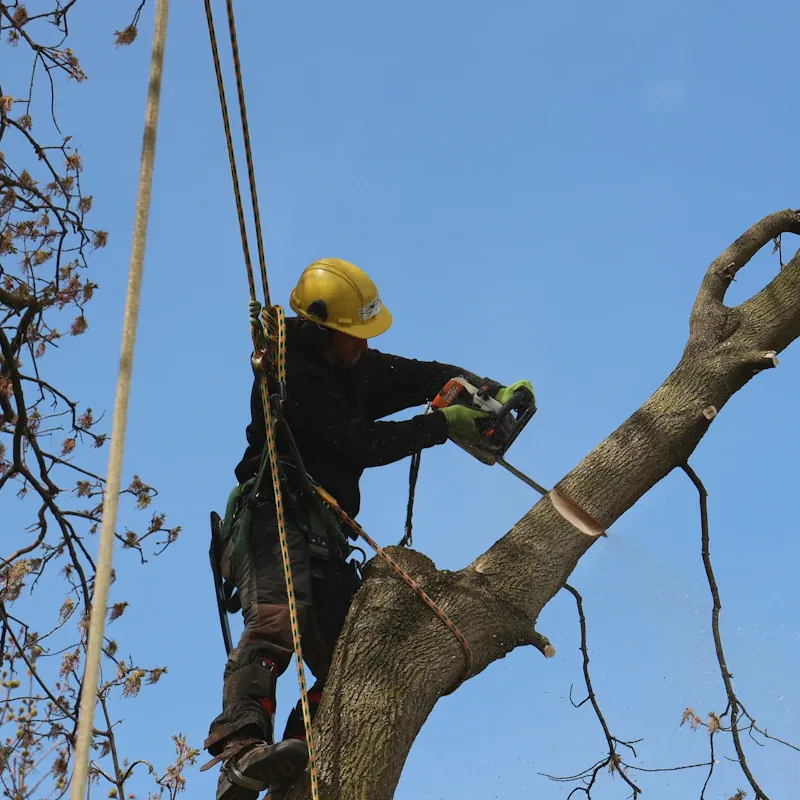
If you own an oak, the question of when to prune oak trees in Ontario is not a small scheduling detail. Get the timing wrong and you can open the door to oak wilt, a fungal disease that can kill a healthy red oak in a matter of weeks. The short version: do not prune your oaks between April and October. Wait for the dormant season. Here is the full picture, and why the month you cut matters more than how you cut.
The short answer: prune oaks in the dormant season
The safe window to prune an oak in Ontario runs from November through March, when the sap beetles that carry oak wilt are dormant and the tree is no longer pushing active growth.
The window to avoid is April through October. That is the warm stretch when those beetles are out, the tree is bleeding sap, and a fresh cut becomes a target. The Invasive Species Centre draws the line in the same place: no oak pruning until November.
So the rule is easy to remember. Cold and bare? Go ahead. Warm and leafy? Leave the saw in the truck unless the limb is a genuine hazard.
What oak wilt is, and why it rewrites the rules for oaks
Oak wilt is an invasive vascular disease caused by a fungus, Bretziella fagacearum. It clogs the vessels that move water and nutrients through the tree, so an infected oak essentially dies of thirst from the inside.
Red oaks are the most vulnerable. Once infected, a red oak can be dead in two to six weeks. White oaks tend to hang on longer, but they are not immune.
The disease moves two ways. Sap beetles pick up fungal spores and carry them to fresh wounds on other trees. And where oaks grow close together, their roots fuse underground, so the fungus can creep from a sick tree straight into the healthy one beside it.
Which oaks are most at risk in southern Ontario
Not every oak carries the same risk, so it helps to know what is in your yard. Oaks split into two broad camps, and the difference is more than academic once oak wilt is in the picture.
The red oak group covers red oak, black oak, and pin oak. You can usually spot them by leaves with pointed, bristle-tipped lobes. These are the high-casualty trees, the ones that can go from healthy to dead in a single summer.
The white oak group covers white oak, bur oak, and swamp white oak, with rounded, bristle-free leaf lobes. They resist the disease better and decline more slowly. Better is not the same as safe.
If you are not sure which one you have, do not stress about it. The dormant-season rule is the right habit for any oak, and it costs you nothing to apply it across the board.
Why a fresh pruning cut is the part you control
Most homeowners cannot do much about root grafts between mature oaks. What you can control is whether you hand the beetles an open wound during their active season.
A pruning cut in July smells like dinner. The sap weeps, the beetles follow the scent, and they show up carrying spores from wherever they fed last. Make that same cut in January and the beetles are grounded, the sap is not running, and the tree has time to wall the wound off before spring.
Quick note if you already slipped up: if you had to prune an oak between April and October, seal the wound right away. A thin coat of pruning paint or shellac over the cut is one of the few times wound dressing is genuinely recommended, precisely because it hides the fresh sap from the beetles.
Oak wilt is now in Ontario, and that is recent news
For years this was a problem Ontario watched from across the border. That changed in 2023, when oak wilt was confirmed in Canada for the first time on a residential property in Niagara Falls. Detections followed in Niagara-on-the-Lake and the Township of Springwater.
It is already established in two dozen U.S. states that border Canada, so the pressure is not letting up. That is the reason arborists across southern Ontario have tightened up on oak-pruning timing in the last couple of seasons. It stopped being theoretical.
If you think you are looking at an infected oak, with leaves browning from the top down and dropping in mid-summer, the Canadian Food Inspection Agency is the body to report it to. Do not move the wood off the property.
When a branch genuinely cannot wait
Timing rules bend for safety. If a storm cracks an oak limb over your driveway in July, you do not leave it hanging for four months because the calendar says so. A broken limb is already an open wound and a falling hazard, and the hazard wins.
In that case the order is simple: deal with the danger, then protect the tree. Remove or make safe the broken limb, and seal the cut surface the same day to keep the beetles off it. That is the narrow exception, not the everyday rule.
Hanging, split, or storm-damaged oak limbs are exactly the kind of work covered under our limb removal service. If a limb is over a roof, a walkway, or a hydro line, say so when you reach out so we can look at it sooner rather than later.
What good oak pruning actually involves
When the dormant season comes around, good oak pruning is mostly about restraint. A healthy mature oak rarely needs much taken off in a single year.
Deadwood and damage first. Dead, broken, and rubbing branches are the priority. They are doing the tree no good, and a few of them are a hazard waiting for a windy night.
A light touch on live wood. Stripping too much green growth at once stresses the tree and forces a flush of weak, crowded regrowth. The sensible habit is to leave the bulk of the live canopy alone in any given winter.
Clean cuts at the collar. Cuts made just outside the branch collar, not flush against the trunk, let the tree seal itself properly. That sealing response is the whole reason dormant-season timing works in the first place.
If that sounds like more judgment than you want to be making from the ground with a pole saw, that is exactly the kind of call worth handing to someone who does it for a living.
A simple oak-pruning calendar for southern Ontario
If you remember nothing else about when to prune oak trees in Ontario, remember this calendar.
November to March: prune freely. This is your window for shaping, deadwood removal, and clearance cuts. Line it up now and the work lands in the right season.
April to October: hands off, unless a limb is a safety hazard. If you have no choice but to cut, seal the wound the same day.
Other species have their own timing, and most south-Ontario trees are more forgiving than oaks. Our guide to when to prune trees in southern Ontario walks through the rest of them. For the oak itself, the dormant-season rule is the one worth being strict about.
Getting the timing right on when to prune oak trees in Ontario really comes down to staying patient through the warm months and being organized for winter. If you have an oak you want shaped or cleaned up, the smart move is to book the tree pruning work now so it happens in the dormant window, across the communities we cover in south Ontario.
Have an oak that needs pruning this winter?
Send a photo of the tree and your address through the contact page. We will tell you whether it is a dormant-season job, whether any limb is urgent enough to look at sooner, and what the work involves. No deposit, no pressure.
Questions homeowners ask
When is it safe to prune oak trees in Ontario? +
Why can't I prune oak trees in summer? +
Is oak wilt actually present in Ontario? +
What should I do if a storm breaks an oak limb in July? +
Do all oak trees get oak wilt? +
Tree services in south Ontario
Rather have it handled? These are the services most relevant to this guide.
- Tree Pruning Clean cuts that keep your tree healthy for decades.
- Limb Removal Hanging, broken, or in the way? Down it comes.
Read more
Burlington Tree Removal Permit: The 20 cm Rule, the Urban Boundary Catch, and the Fees
The Burlington tree removal permit explained: the 20 cm rule, the urban-boundary catch, the $54 fee, and when a prune skips it entirely.
Oakville Tree Removal Permit: The 15 cm Rule, the Fees, and When Pruning Skips It
A plain guide to the Oakville tree removal permit: the strict 15 cm rule, the fees, the replacement-tree deposit, and when pruning skips it entirely.